2016년 2월 9일 화요일

20160209_Some articles

1. 5 Things You Have To Learn From Kyle Bass

http://blog.stocktwits.com/5-things-we-learned-from-kyle-bass/

2. 'Risk Parity' strategy shows strain
http://www.ft.com/intl/cms/s/0/8542e88e-cea6-11e5-92a1-c5e23ef99c77.html#axzz3zfwok1Cd

Last year was a terrible one for “risk parity”, once one of the hottest strategies in the investment world, as losses mounted and some analysts blamed it for exacerbating market turbulence. So far 2016 has offered little respite.
...
But the performance started to sag in 2014, and nosedived last year, ruining its reputation for resilience in almost any conditions. The Salient Risk Parity index slumped 12 per cent in 2015 and JPMorgan’s gauge of risk parity fund performance fell more than 8 per cent.
...
Even pioneers of the strategy have suffered a bad time. Bridgewater’s “All Weather” risk parity fund lost 7.7 per cent last year and is down about 10 per cent net of fees since July 2014, according to a person familiar with the matter.
....
Adding to the woes(Commodity), bonds — a big part of risk parity portfolios — have failed to act as a suitable counterweight for the once seemingly bulletproof strategy.
....
“Rates have historically done well in environments like this, but last year we got nothing out of it,” says Mr Knight....“This is a world where there are some purists, and the theory underpinning risk parity is strong, so there aren’t that many that change their approach,” he says. “I don’t consider myself a purist, and there are some regimes that aren’t that risk parity friendly.”
...
The crucial question is whether this bout of underperformance is an unpleasantly long but still temporary blip, the start of a new risk parity-unfriendly market regime, or even a symptom of something more broadly awry in the fundamental assumptions underpinning the strategy.
Industry insiders are still confident it is the first, and are hopeful that a turnround beckons. Bridgewater’s All Weather fund is still “a much better ‘sleep at a night’ portfolio than any single asset class and most portfolios”, argues an executive at the hedge fund.
Similarly, Mr Mendelson at AQR says that apart from some minor implementation tweaks he has not changed anything as a result of market movements. “Systematic investing does best when you run a consistent process that doesn’t change in response to short-term fluctuations,” he argues.


3. 스마트베타, 패시브와 액티브 모두의 대안
http://m.thebell.co.kr/m/newsview.asp?svccode=00&newskey=201602010100002350000145

4. Hedgeable
https://www.hedgeable.com/hedgeable-investment-philosophy-white-paper#capm

...
Eliminating 75% of the losses during these two periods has an immense effect on portfolio growth, adding more than $1 million over 25 years. For a hard-working American investing for retirement, that extra $1 million can significantly boost their standard of living.
MPT based index investing will never achieve this kind of loss reduction; an MPT philosophy inherently accepts all losses and thus represents a huge opportunity cost for long-term investors.
...
Contrary to what the MPT zealots have made the public believe, managers have been able to achieve the kind of loss reduction shown above. Consider the tangible example of the performance of Bridgewater Associates’ Pure Alpha Fund (the firm where Hedgeable CEO Mike Kane began his career) versus the S&P:

Bridgewater produced a return that nearly doubled that of the S&P with about half the volatility, and a (-14.18%) max drawdown, thus cutting out 75.03% of the losses. Bridgewater is an alternative manager that invests in futures, options, and other vehicles that are typically only purchased for wealthy or sophisticated investors. But what if we could echo this sort of risk-managed profile by using large, liquid ETFs and stocks instead of complicated ultra-high-net-worth instruments? Later in this paper, we will explore how Hedgeable has disrupted the market by making that possible and available to everyone.
...

5. ‘Robo-advisers’ try to calm investor nerves
http://www.ft.com/intl/cms/s/0/3a44af14-c6ec-11e5-808f-8231cd71622e.html#axzz3zfwok1Cd

Daniel Egan, director of behavioural finance and investing at New York-based Betterment, said the firm had received higher volumes of calls and emails in recent weeks, and was trying to ease concerns by providing “very personalised, very positive” notifications when customers log in.

6. Which robos got off to the fastest start in 2016?

http://www.investmentnews.com/article/20160115/FREE/160119956/which-robos-got-off-to-the-fastest-start-in-2016
 
2016 1월 현재 로보어드바이져 AUM 2015 01과 비교


2016년 1월 31일 일요일

20160129의 기회 (BOJ)

BOJ 펴서 먹고 인생 피긴 힘들지.
이보단,
S&P를 주목하고 있었는데. 유일하게 악재가 될 수 있는 상황은 밤중에 발표되는 GDP.
GDP 발표 후 가능한 시장 시나리오는
1. 급등
2. 급락
3. 지지부진

1. 금등 -> 못들어감
2. 급락 -> 못들어감
3. 지지부진 -> 불확실 해소. "롱".

20160129. 3번.

Oil

1. OPEC 감산하지 못하는 이유
죄수 딜레마, 비 OPEC

http://m.post.naver.com/viewer/postView.nhn?volumeNo=3096954&memberNo=11292208&vType=VERTICAL

Some articles : Twosigma, Machine Learning

1. http://www.businessinsider.com/artificial-intelligence-team-at-bridgewater-2015-2

2. http://qz.com/389647/artificial-intelligence-is-the-next-big-thing-for-hedge-funds-seeking-an-edge/

3. http://www.forbes.com/sites/nathanvardi/2016/01/13/top-quant-hedge-funds-stand-out-with-good-2015/#3a6dcf96558e

4. http://www.forbes.com/sites/nathanvardi/2015/09/29/rich-formula-math-and-computer-wizards-now-billionaires-thanks-to-quant-trading-secrets/#41c08ff57f30\

5. http://www.wired.com/2016/01/the-rise-of-the-artificially-intelligent-hedge-fund/

6. http://www.valuewalk.com/2016/01/managed-futures-market-turmoil/

7. http://marketsmedia.com/best-hedge-fund-two-sigma-investments/


머신러닝개괄 쉽게 설명 한글

http://slownews.kr/41461

2016년 1월 24일 일요일

Some articles and papers

1. The best strategies we have tested
 - http://www.quant-investing.com/strategies

2. Does the "Sharp Parity" work better than "Risk Parity"?
 - http://blog.alphaarchitect.com/2015/01/27/does-sharpe-parity-work-better-than-risk-parity/?utm_source=Alpha%20Architect%20Website%20Users&utm_campaign=df7ac0889d-RSS_EMAIL_CAMPAIGN&utm_medium=email&utm_term=0_2f87b7924e-df7ac0889d-188292261#.VMlTH2tdaK0

3. A Tug of war : Overnight Versus Intraday Expected Returns
http://blog.alphaarchitect.com/2015/02/12/overnight-momentum-vs-intraday-momentum/?utm_source=Alpha%20Architect%20Website%20Users&utm_campaign=72df424a39-RSS_EMAIL_CAMPAIGN&utm_medium=email&utm_term=0_2f87b7924e-72df424a39-188292261#.VOAT8ZWGkEN.facebook

4. Global Assets Allocation - New Books!
http://mebfaber.com/2015/02/24/global-asset-allocation-a-survey-of-the-worlds-top-asset-allocation-strategies/

5. How to combine value and momentum investing strategies
http://blog.alphaarchitect.com/2015/03/26/the-best-way-to-combine-value-and-momentum-investing-strategies/#.VSGqdy9darV

6. 9 Mistakes Quant make that cause basctests to lie
http://blog.alphaarchitect.com/2015/03/26/the-best-way-to-combine-value-and-momentum-investing-strategies/#.VSGqdy9darV

7. Looking back at Risk Parity's Golden age
http://blog.alphaarchitect.com/2015/03/26/the-best-way-to-combine-value-and-momentum-investing-strategies/#.VSGqdy9darV

8. Our thought about risk parity and all weather - Bridgewater capital
https://www.bwater.com/Uploads/FileManager/research/Our%20Thoughts%20about%20Risk%20Parity%20and%20All%20Weather.pdf

9. Two centuries of momentum
https://www.thinknewfound.com/foundational-series/two-centuries-of-momentum/

10. How not to wipe out with momentum
http://www.researchaffiliates.com/Our%20Ideas/Insights/Fundamentals/Pages/448_How_NOT_to_Wipe_Out_with_Momentum.aspx


<Papers>

1. . . . and the Cross-Section of Expected Returns
http://papers.ssrn.com/sol3/papers.cfm?abstract_id=2249314

2. Factor investing
http://papers.ssrn.com/sol3/papers.cfm?abstract_id=2277397&rec=1&srcabs=2249314&alg=1&pos=2

3. Momentum crash
http://papers.ssrn.com/sol3/papers.cfm?abstract_id=2371227#.VcAeLr2pmyY.facebook

4. Quantifying trading behavior in financial markets using google trends
https://www.google.co.kr/search?q=Quantifying+Trading+Behavior+in+Financial+Markets+Using+Google+Trends&oq=Quantifying+Trading+Behavior+in+Financial+Markets+Using+Google+Trends&aqs=chrome..69i57j69i59j69i61l2.437j0j9&sourceid=chrome&es_sm=91&ie=UTF-8

5. Facts about Factor
http://papers.ssrn.com/sol3/papers.cfm?abstract_id=2594485


2016년 1월 5일 화요일

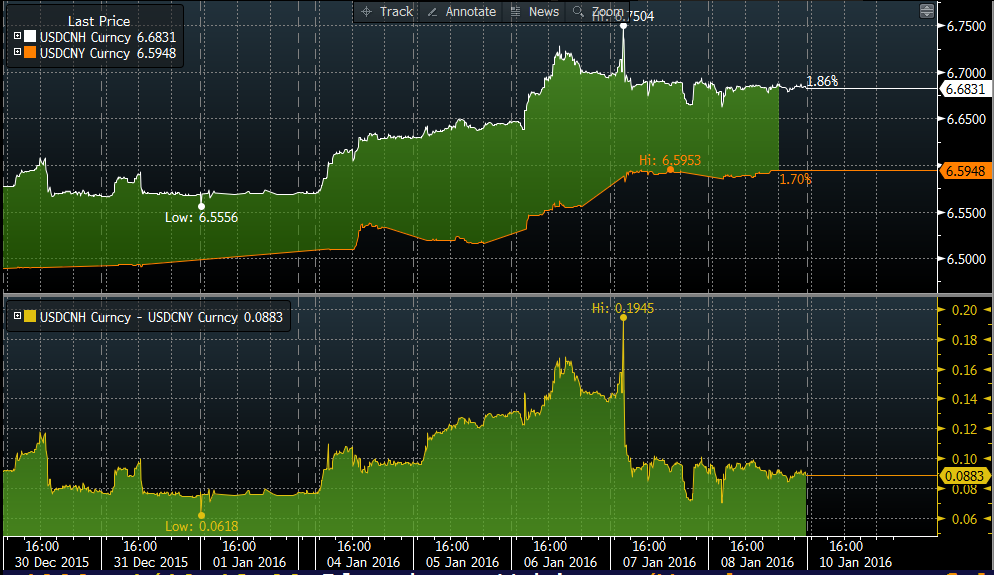
위안화_쓰는중

일별달러-위안 기준환율시장거래 환율 마감가
30일6.48956.4902
31일6.49366.4936
4일6.50326.5172
5일6.51696.5199
6일6.53146.5575


이곳 저곳에서 보면 내수 위주로 체질 개선을 해야 한다고 나오는데 롤 모델이 어디지? 그리고 이게 가능한 상태는 어떤 상태 인가?


3. A few small steps for the CNY, potentially a big leap lower in EM FX. The clearest implication of China joining the currency depreciation train is that it further increases depreciation pressures on the rest of the EM FX complex. There are two important channels of transmission here: First, because China as a producer competes with several EMs in global markets, those EM exporters just became a touch less competitive relative to Chinese exporters;

 and second because China as a consumer is also a large destination for exports from the rest of EM, although in this case there is at least the possibility of a partial offset from any improvement in demand if an easing in financial conditions is delivered. 

So for EMs that have been trying to address their external balance, and have seen depreciating currencies since 2013, some of that relative price shift has just been undone.

 And if the recent CNY moves are the start of a journey, even undoing half of the accumulated trade-weighted appreciation of the last three years, this may provoke a meaningful additional bout of currency depreciation across the EM complex (Exhibit 1).

EM currency depreciation 에 큰 영향
1. 몇몇 EM 국가들은 중국과 수출 경쟁에 놓여 있다.
 - 위안화 약세로 수출 경쟁 악화

2. 수요자로써 중국의 역할 약화
 - 물론 중국 경제가 easing으로 인해 회복 된다면 이에 대한 긍정적인 측면도 있을 것이다.


4. THB, TWD, KRW and MYR most vulnerable to the increased competitiveness of Chinese exports. Digging deeper into the two channels of transmission reveals which EMs could see further FX pressures if the devaluation in China extends. 

Regarding the first channel, in the global market for exports China competes with countries that export the same goods, as well as countries that export to the same places. 

We use two variants of the Finger and Kreinin (1979) index to identify competition across each of these dimensions based on 2014 data from UNCTAD (the United Nations Conference on Trade and Development) on the bilateral trade of 255 types of goods exported from 50 countries that together comprise roughly 90% of world goods exports (Exhibit 2). 

A value of 1 on this index indicates an identical match – countries that are in direct competition based on the category of goods they export or the countries that buy their goods – while 0 indicates a completely dissimilar export basket. 

The top right of Exhibit 2 reveals a cluster of countries (THB, TWD, KRW, MYR) that export similar categories of goods to similar markets, and are likely to be most exposed to more competitive Chinese exports. 

These are also the currencies where we forecast the most depreciation (along with IDR) in the Asian region. Interestingly, the CEE-3 and TRY, grouped at the bottom right of exhibit 2, export similar categories of goods to China, but to very different markets – so these currencies should be less affected by the CNY depreciation, at least in the short run.


크루그먼
http://krugman.blogs.nytimes.com/2015/08/12/china-bites-the-cherry/?_r=2#
"But it’s important to understand how that works. When Japan loosens money, it creates an incentive to move funds abroad, causing the yen to fall. This process only stops once the yen has fallen enough that investors consider it undervalued, and are willing to buy Japanese securities in the expectation of a future yen rise. Exchange rate overshooting is an essential part of the story."