2016년 1월 5일 화요일

위안화_쓰는중

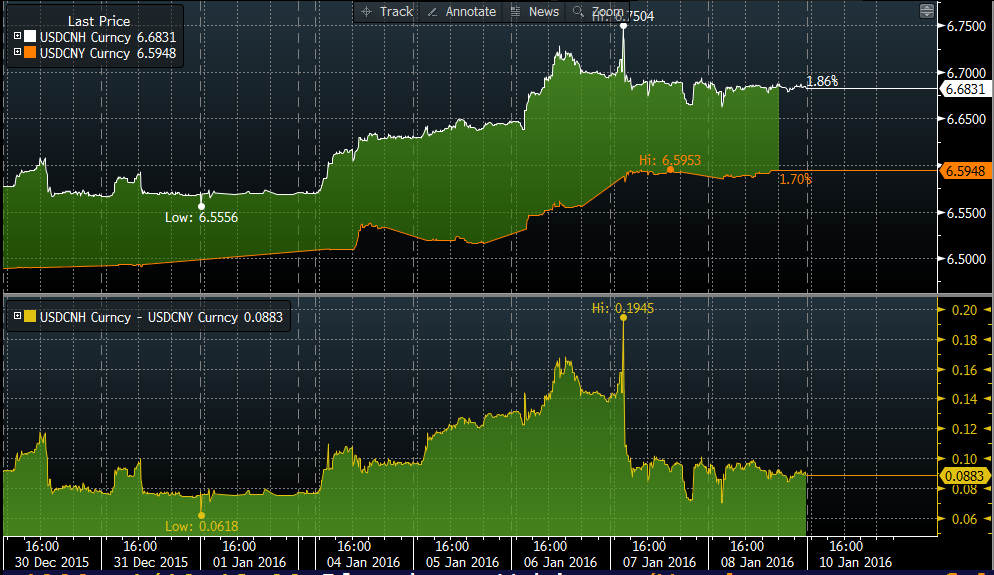
일별달러-위안 기준환율시장거래 환율 마감가
30일6.48956.4902
31일6.49366.4936
4일6.50326.5172
5일6.51696.5199
6일6.53146.5575


이곳 저곳에서 보면 내수 위주로 체질 개선을 해야 한다고 나오는데 롤 모델이 어디지? 그리고 이게 가능한 상태는 어떤 상태 인가?


3. A few small steps for the CNY, potentially a big leap lower in EM FX. The clearest implication of China joining the currency depreciation train is that it further increases depreciation pressures on the rest of the EM FX complex. There are two important channels of transmission here: First, because China as a producer competes with several EMs in global markets, those EM exporters just became a touch less competitive relative to Chinese exporters;

 and second because China as a consumer is also a large destination for exports from the rest of EM, although in this case there is at least the possibility of a partial offset from any improvement in demand if an easing in financial conditions is delivered. 

So for EMs that have been trying to address their external balance, and have seen depreciating currencies since 2013, some of that relative price shift has just been undone.

 And if the recent CNY moves are the start of a journey, even undoing half of the accumulated trade-weighted appreciation of the last three years, this may provoke a meaningful additional bout of currency depreciation across the EM complex (Exhibit 1).

EM currency depreciation 에 큰 영향
1. 몇몇 EM 국가들은 중국과 수출 경쟁에 놓여 있다.
 - 위안화 약세로 수출 경쟁 악화

2. 수요자로써 중국의 역할 약화
 - 물론 중국 경제가 easing으로 인해 회복 된다면 이에 대한 긍정적인 측면도 있을 것이다.


4. THB, TWD, KRW and MYR most vulnerable to the increased competitiveness of Chinese exports. Digging deeper into the two channels of transmission reveals which EMs could see further FX pressures if the devaluation in China extends. 

Regarding the first channel, in the global market for exports China competes with countries that export the same goods, as well as countries that export to the same places. 

We use two variants of the Finger and Kreinin (1979) index to identify competition across each of these dimensions based on 2014 data from UNCTAD (the United Nations Conference on Trade and Development) on the bilateral trade of 255 types of goods exported from 50 countries that together comprise roughly 90% of world goods exports (Exhibit 2). 

A value of 1 on this index indicates an identical match – countries that are in direct competition based on the category of goods they export or the countries that buy their goods – while 0 indicates a completely dissimilar export basket. 

The top right of Exhibit 2 reveals a cluster of countries (THB, TWD, KRW, MYR) that export similar categories of goods to similar markets, and are likely to be most exposed to more competitive Chinese exports. 

These are also the currencies where we forecast the most depreciation (along with IDR) in the Asian region. Interestingly, the CEE-3 and TRY, grouped at the bottom right of exhibit 2, export similar categories of goods to China, but to very different markets – so these currencies should be less affected by the CNY depreciation, at least in the short run.


크루그먼
http://krugman.blogs.nytimes.com/2015/08/12/china-bites-the-cherry/?_r=2#
"But it’s important to understand how that works. When Japan loosens money, it creates an incentive to move funds abroad, causing the yen to fall. This process only stops once the yen has fallen enough that investors consider it undervalued, and are willing to buy Japanese securities in the expectation of a future yen rise. Exchange rate overshooting is an essential part of the story."

2015년 12월 30일 수요일

20151231_Q

1. 주 전공이 채권인데 왜 채권을 많이 안하시나요?

2. 단기, 중기, 장기로 구분해서 포지션을 가져가지 않는 이유는?

20151230_Melissa Ko


http://www.bloomberg.com/news/articles/2010-10-17/covepoint-s-ko-reaps-22-gain-on-emerging-currencies-converging-to-g-10


 “When other people panic, then you see it as an opportunity, and when other people are too complacent, you should start to question,” 

“We tend to be contrarian -- certainly not for the sake of being contrarian -- but we do question the prevailing themes to see if they really make sense"

“You have to have your mind on the fundamentals, but at the same time you also have to have a sense of what is the dominant narrative at any given moment,” 

 “The point of maximum opportunity is when that changes.”

“Our tendency to question the consensus -- it’s more art than science,”

Brazil Bet

The Covepoint fund surged almost 63 percent in 2009 after Ko and her team bet correctly on Brazil. In late 2008, they wagered that Brazil’s central bank would break with tradition and lower, not raise, interest rates in response to the global financial upheaval.
“In many of their crises before, the response was always to hike rates massively, trying to stem capital flight,” Ko says. Since the crisis didn’t originate in Brazil, Ko and her team figured the bank would act differently, she says.
The bet paid off when Brazilian central bankers cut the benchmark Selic rate five times from 13.75 percent over the course of 2009 to a low of 8.75 percent.
“Our trade didn’t start to make a lot of money right away; it wasn’t the consensus for a long time,” she says. “We had to wait for it to pan out.” The real strengthened 33 percent against the U.S. dollar in 2009, trading at 1.7445 at year-end

-----------------------------------------
그 뒤 2011 기사

Ko's Covepoint Fund Fell 38% in September on Currency Bets

http://www.bloomberg.com/news/articles/2011-10-05/investors-lose-money-purchasing-bailout-fund-bonds-from-efsf-euro-credit
-----------------------------------------
그 뒤 Famillly office 로 바꾸고..
2015말 기사
http://www.wsj.com/articles/a-bold-few-traders-earn-billions-flouting-rivals-1451348703

One of the few outsize currency wins belongs to a South Korea-born manager who said she produced a more-than-120% return with bets against the euro, as well as the Australian dollar and Brazilian real as the commodities rout took hold.
Melissa Ko, 48, spoke no English when she moved to the U.S. in her teens. She started her own hedge fund after rising through the ranks at securities firm Bear Stearns & Co. Inc., and continued to invest her own money upon closing the fund two years ago.
This year her gains amounted to $60 million, she said, pushing her personal fortune above $100 million. She used leverage, or borrowed money, of up to eight times to boost returns.
Heading into 2016 she is adding a bearish wager against the Japanese yen and joining peers on a renewed bet against Europe as policy makers’ powers on the continent wane. She said she thinks the euro will fall below parity against the U.S. dollar in the coming year.
“People have become disappointed and soured on the trade,” she said of the of-late reversal for the euro. “But I think it’s just a little blip.”

2015년 12월 20일 일요일

중국 & 위안화


1. 위환화 약세가 원달러에 미칠 영향

한국
- 중국에 대한 중간제 수출 비중이 높음
- 중국의 수출 생산 감소는 한국에 악재


그렇다면 이러한 위안화 절하가 어떤 결과를 가져올까? 우선 경제적으로 한국과 중국이 서로 경쟁관계라면 위안화 절하는 일차적으로 주식시장에 충격을 줄 것이다. 만약 중국 수출의 호조가 한국의 중간재 수출을 늘리는 구조라면 주식시장에 충격을 준 후 시간을 두고 장기적으로 보면 오히려 호재일 수 있다. 그리고 위안화 절하는 어쩔 수 없이 한국 통화의 절하에 대한 기대감을 높일 것이다. 한국은행은 금리인하 압력에 시달릴 것이다. 그리고 금리인하를 단행하게 될 것이다.


Q> 중국과 한국은 같은 품목을 생산하는 수출 경쟁 국가   Vs  중국은 한국에 중간재를 수입하는 국가(중국 수출이 늘어나면 한국 수출이 늘어나는 구조)


2. 중국의 금리인하

중국으로 중간재 수출 증가의 효과를 보기에는 오랜 시간이 걸릴 것


 중국의 금리인하는 과도한 투자와 설비가 조정되는 과정에서 생기는 생산 감소와 고용 축소에 대응하기 위해서다금리인하가 공격적일수록 위안화 절하 폭은 커질 것이고 한국을 비롯한 역내 교역국 경제에 미치는 충격도 과격할 것이다.


한국의 수출 부진은 중국의 수출 생산 감소와 제조업 부진과 궤를 같이한다중국의 생산 감소로 인해 아시아 역내 수출이 모두 부진한 것이다경제의 하드랜딩을 우려하는 중국정부의 우려로 중국의 과잉설비는 비교적 오랜 시간을 들여 해소될 것이기 때문에 아시아 역내 생산이 단기적으로 좋아지기는 매우 어려울 것이다현재 우려되는 것은 제조업 섹터의 높은 재고 비율이다재고/비율은 금융위기 이후 가장 높은 수준이며 이 비율이 해소되는 것은 생산의 감소로 이루어질 것이다내년도 성장률은 올해보다 낮을 가능성이 높다특히 수출은 올해보다 더 위축될 가능성이 있다그리고 추가적인 위험도 아래쪽이다특히 중국 경제가 예상보다 더 위축될 가능성을 감안해야 한다.


요즘 신문에서 많이 보이는 "미국 연준이 금리를 올릴 것이니 시장 금리가 올라갈 것이다"라든가 "그러니 달러도 강세가 될 것이다"라든가 그래서 "한국도 금리를 올릴 것이니 금리가 올라갈 것이다"라든가 하는 논리는 그럴 듯 하게 들린다. 하지만 몇 십년을 금융시장에서 일하면서 저런 단순한 논리로 돈을 버는 사람을 한번도 본 적이 없다. 대개 신문 지상에 저런 주제가 오를 때 즈음에는 다 뒷북이고 잔치는 끝나있다. 최근 2년간 달러 강세는 가열차게 진행되었고 지금 유로와 엔의 약세는 거의 끝물이다. 지난 10년 간 금융시장은 직관에 반하는 생각을 하는 자들이 외려 큰 돈을 벌었다. 즉, (1) 연준이 금리를 올리는데 금리는 외려 하락하고 (그린스펀이 말한 수수께끼(conundrum) 현상) (2) 주가는 마구 올라가는데 주택버블이 결국은 터지고 (나십 탈렙이 말한 '블랙 스완') (3) 가계부채를 우려하지만 금리는 결국 질질 끌려 내려갔다. (1990년 대 일본의 데자부) 결론은 대중(언론)의 직관과 돈을 버는 논리는 대개 따로 논다는 것.

2015년 12월 1일 화요일

20151201(화)_미국10Y T

<From Seoul.blogspot.com>
QE1
2008년 11월 25일, 5000억불의 MBS 매입과 1000억불의 공사채(agency) 매입 계획 발표당시 미국 10년 금리는 3.10%.
2009년 3월 18일, 3000억불의 국채와 7500억불의 MBS, 1000억불의 추가 공사채 매입 계획 발표 당시 미국 10년 금리는 2.53%

QE2
2010년 11월 3일, 6000억불의 국채매입 계획 발표 당시 미국채 10년 금리는 2.67%

2011년 8월 5일, 미국 신용등급 강등

Operation twist

2011년, 9월 21일, 4000억불의 단기국채를 팔고 장기국채를 동일 액수로 매입하겠다고 발표할 당시 미국채 10년 금리는 1.88%

2012년, 9월 13일, 2670억불의 단기국채를 팔고 장기국채를 동일 액수로 추가 매입하겠다고 발표 당시 미국채 10년 금리는 1.75%


QE3

2012년 9월 13일, 노동시장의 회복신호가 확실해질 때까지 적어도 월 400억불의 MBS를 매입하겠다고 발표 당시 미국채 10년 금리는 1.75%

2012년 12월 12일, 매월 450억불의 장기국채와 400억불의 장기 MBS를 매입하겠다고 발표. 하지만 단기국채를 팔지 않고 지준에서 조달하겠다고 발표할 당시 미국채 10년 금리는 1.72%.